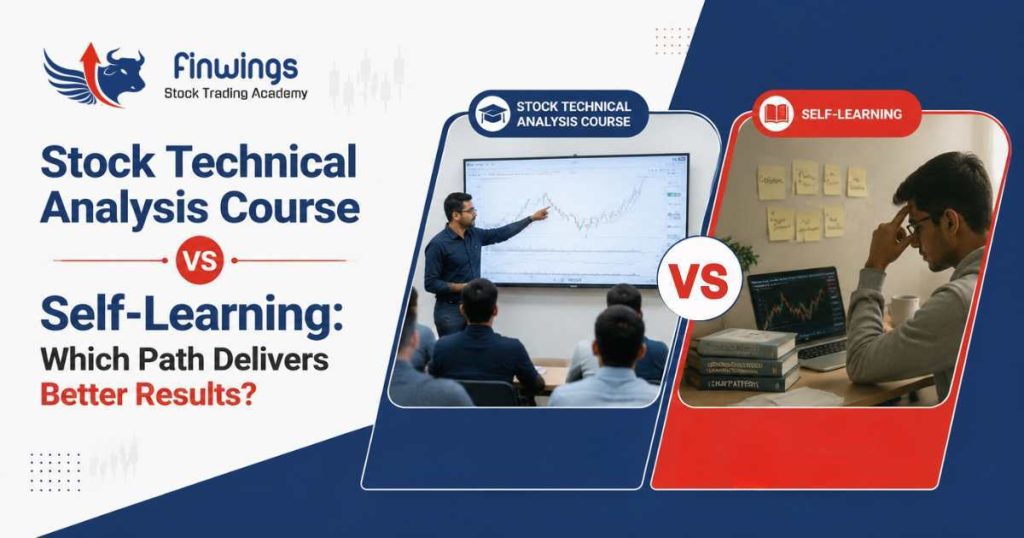
Learning technical analysis has become more accessible than ever. With countless books, videos, blogs and trading communities available online, many aspiring traders wonder whether they should learn independently or enrol in a stock technical analysis course. While self-learning offers flexibility, structured education provides a guided approach that can help learners avoid common mistakes and develop practical trading skills more efficiently.
The right choice depends on your learning style, goals and commitment. Understanding the advantages and limitations of both approaches will help you invest your time and resources wisely while building a solid foundation in technical analysis.
Structured Stock Technical Analysis Course for Faster Learning
A stock technical analysis course offers a structured curriculum, expert guidance and practical market application that many self-learners struggle to achieve independently. While self-study can be effective for disciplined learners, organised training often shortens the learning curve and improves consistency by combining theory with real-world trading examples.
Understanding Self-Learning
Self-learning allows traders to explore markets at their own pace using freely available resources.
Common learning sources include:
- YouTube tutorials
- Trading books
- Financial blogs
- Market webinars
- Online communities
- Demo trading platforms
This approach is cost-effective and flexible, making it attractive to beginners who want to explore trading before investing in formal education.
However, the abundance of information can also create confusion, especially when different sources present conflicting strategies.
The Benefits of Structured Learning
A professional course follows a logical progression from basic concepts to advanced market analysis.
Students typically learn:
- Market structure
- Chart patterns
- Candlestick analysis
- Trend identification
- Support and resistance
- Risk management
- Trading psychology
- Strategy development
A structured curriculum helps learners understand how these concepts work together instead of studying them in isolation.
Practical Guidance Makes a Difference
One of the biggest advantages of formal training is access to experienced mentors.
Learning directly from market professionals enables students to:
- Ask questions
- Clarify doubts
- Understand real market scenarios
- Avoid common beginner mistakes
- Receive constructive feedback
Practical guidance often accelerates learning more effectively than relying solely on trial and error.
The Importance of Discipline
Successful trading depends not only on technical knowledge but also on discipline and consistency.
Many independent learners focus heavily on indicators while overlooking essential areas such as:
- Position sizing
- Risk management
- Emotional control
- Trade journalling
- Performance review
Structured programmes generally incorporate these critical elements into the learning process, creating more well-rounded traders.
Building Credibility Through Certification
For individuals seeking careers in financial markets or advisory roles, obtaining a technical analysis certification can strengthen professional credibility.
While certification alone does not guarantee trading success, it demonstrates formal learning and commitment to developing recognised market analysis skills.
Learning Beyond the Classroom
Modern online stock market classes combine flexibility with expert instruction, allowing students to learn from anywhere while participating in live discussions, practical exercises and market analysis sessions.
This blended approach offers many of the advantages of classroom training without geographical limitations, making quality education more accessible to aspiring traders across India.
Which Approach Produces Better Long-Term Results?
There is no single path that guarantees trading success. Highly disciplined learners can achieve excellent results independently, while others benefit significantly from structured guidance.
The most effective approach often combines both methods. Formal education provides a strong foundation, while self-study encourages continuous improvement through ongoing market observation, reading and practice.
Regardless of how you begin, consistent learning, disciplined execution and regular performance evaluation remain essential for long-term success.
The Takeaway
Both self-learning and structured education have their strengths, but a stock technical analysis course often provides a clearer roadmap, practical mentorship and stronger learning outcomes for aspiring traders. By combining structured training with continuous self-study and disciplined practice, learners can build lasting trading skills and greater market confidence. Finwings Academy supports this journey through comprehensive programmes designed to help individuals develop practical knowledge and make informed trading decisions.
FAQs :
1. Is a stock technical analysis course suitable for complete beginners?
Yes. A stock technical analysis course typically starts with fundamental market concepts before progressing to advanced topics. Beginners benefit from structured lessons, guided practice and expert support, making it easier to understand technical analysis without feeling overwhelmed by the vast amount of information available online.
2. Can I become a successful trader through self-learning alone?
Yes, many traders succeed through self-study, but it requires discipline, patience and consistent practice. Independent learners must carefully evaluate information sources, avoid misinformation and develop strong risk management habits while gaining practical market experience over an extended period.
3. Are online stock market classes as effective as classroom training?
Modern online stock market classes provide interactive learning through live sessions, recorded lectures, practical demonstrations and mentor support. When delivered by experienced professionals, they can offer learning outcomes comparable to traditional classroom programmes while providing greater flexibility and convenience.
4. Does a technical analysis certification guarantee trading success?
No. A technical analysis certification demonstrates formal learning and strengthens professional credibility, but successful trading ultimately depends on practical experience, disciplined execution, sound risk management and continuous learning as financial markets evolve.
5. How long does it take to learn technical analysis properly?
Learning technical analysis is an ongoing process. Most learners understand core concepts within a few months, but developing consistent trading skills requires regular practice, market observation, performance reviews and continuous improvement based on real trading experience and changing market conditions.