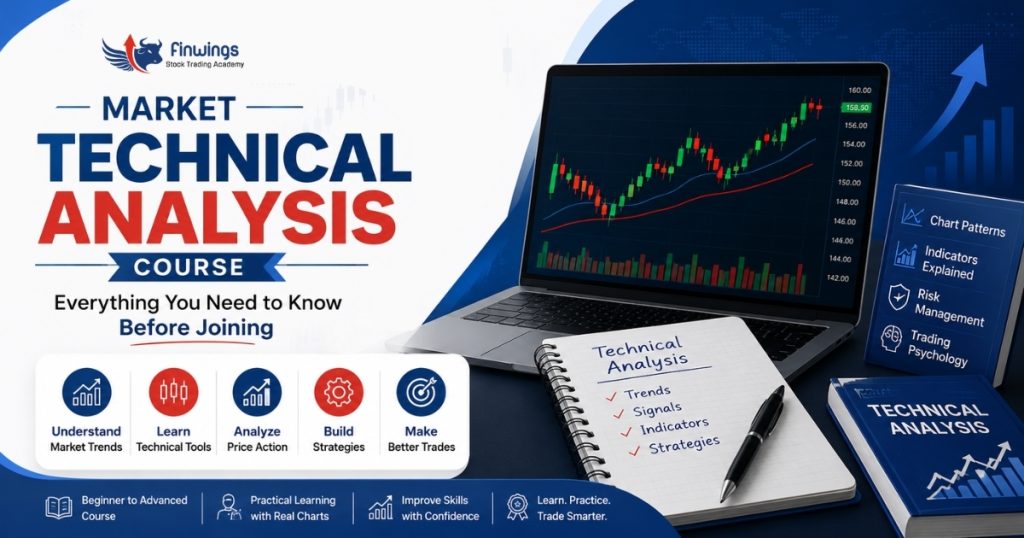
The stock market doesn’t reward guesswork — it rewards people who actually understand what they’re looking at. Whether you’re planning to trade on your own or just want sharper investment instincts, a market technical analysis course gives you the structured grounding to read price movements, chart patterns and market trends properly. Not every course delivers that, though. Before you enrol, it’s worth knowing what a solid programme should actually include, who it’s built for, and how it translates into real trading skills. Get this choice right now, and you’re setting yourself up for a much stronger foundation later on.
How Does a Market Technical Analysis Course Turn You Into a Better Trader?
A market technical analysis course walks you through reading price charts, spotting market trends, understanding technical indicators and building trading strategies you can actually stick to. A good programme blends theory with hands-on market analysis, so you end up making decisions based on data rather than gut feeling or panic.
What Exactly Is Technical Analysis?
At its core, technical analysis means studying past price movements and trading volumes to size up potential opportunities. Rather than digging into company fundamentals, traders read charts and indicators to spot trends and figure out good entry or exit points.
You’ll typically come across:
- Candlestick patterns
- Support and resistance levels
- Trendlines and price channels
- Moving averages
- RSI, MACD and other momentum indicators
These tools give traders a clearer read on market behaviour and help decisions feel less like a coin flip.
What Should a Good Course Actually Cover?
A well-built programme doesn’t stop at basic chart reading. It should push you towards genuine analytical thinking and practical application.
Look out for modules on:
- Market structure and price action
- Chart pattern recognition
- Risk and money management
- Trading psychology
- Strategy development
- Live market analysis sessions
The best instruction gets you applying concepts in real market conditions — not just memorising a list of indicators.
Who Actually Benefits From This Course?
Technical analysis isn’t limited to one type of learner. It suits:
- Beginners just entering the financial markets
- Investors trying to time their entries better
- Active traders chasing more consistency
- Working professionals picking up a new skill on the side
- Anyone interested in proper stock market training
You don’t need prior trading experience for most beginner-friendly programmes — though showing up consistently and putting in the practice still matters.
Why Practical Learning Actually Matters Here
Reading charts isn’t something you learn from a textbook alone — it’s a skill you build through repetition. Courses built around live market examples, real case studies and mentor feedback help learners see how these concepts hold up when conditions actually change.
Hands-on learning helps you:
- Apply indicators with more confidence
- Build that confidence gradually, not overnight
- Sharpen your trade planning
- Learn to execute with discipline
- Judge your own trading performance honestly
Practical exposure is really what closes the gap between theory and the real thing.
Choosing the Right Training Institute
Don’t just compare fees before you enrol — compare quality.
Weigh things like:
- Faculty with genuine market experience
- A curriculum that’s actually kept current
- Live sessions and real assignments
- Support when you’re stuck and need answers
- Learning outcomes that are laid out clearly
A solid trading academy India should be focused on building your analytical skills, not selling you unrealistic profit dreams.
If you want something to show for your effort, a technical analysis certification adds credibility and proves you’ve put in the structured work to understand how markets actually move.
Closing Insights
Choosing the right market technical analysis course is really an investment in your own trading discipline. A programme that pairs technical theory with real market practice helps you trade with more confidence, manage risk properly and make calls based on information rather than instinct. If you’re ready to build a genuine understanding of technical analysis through structured learning and expert guidance, Finwings Academy offers training built to get aspiring traders truly market-ready.
FAQs :
1. Is a market technical analysis course suitable for complete beginners?
Yes, absolutely. A market technical analysis course takes beginners through charts, indicators, trends and trading psychology step by step. Most programmes start simple before building up to advanced material, so learners gain confidence through steady, practical practice.
2. What skills will I actually gain from stock market training?
Solid stock market training teaches you price action, risk management, chart reading and disciplined strategy-building. You’ll also learn to read market conditions, keep emotions in check during trades, and apply technical tools properly instead of chasing rumours.
3. Does a technical analysis course guarantee trading profits?
No — and be wary of anyone who says otherwise. Markets carry real risk and conditions shift constantly. What a good programme does teach is analytical technique, disciplined decisions and proper risk management, all of which take continuous practice to master.
4. Is a technical analysis certification worth pursuing for aspiring traders?
A technical analysis certification shows you’ve completed structured learning in chart reading and market principles. It won’t guarantee success on its own, but it strengthens your knowledge base and signals real commitment to disciplined, recognised trading methods.
5. How do I pick the right trading academy?
Go for a trading academy India with experienced mentors, a genuinely practical curriculum, live sessions and clear learning outcomes. Checking student reviews and comparing course content properly will help you land on a programme that actually fits your goals.