If you’ve ever thought about trading stocks seriously, you’ve probably asked yourself one thing: do you really need a stock trading certification? With so much free content online, it’s easy to assume you can learn everything from YouTube videos or trading influencers. But the truth is, the stock market is more complex than it looks. One wrong decision without proper knowledge can cost real money.
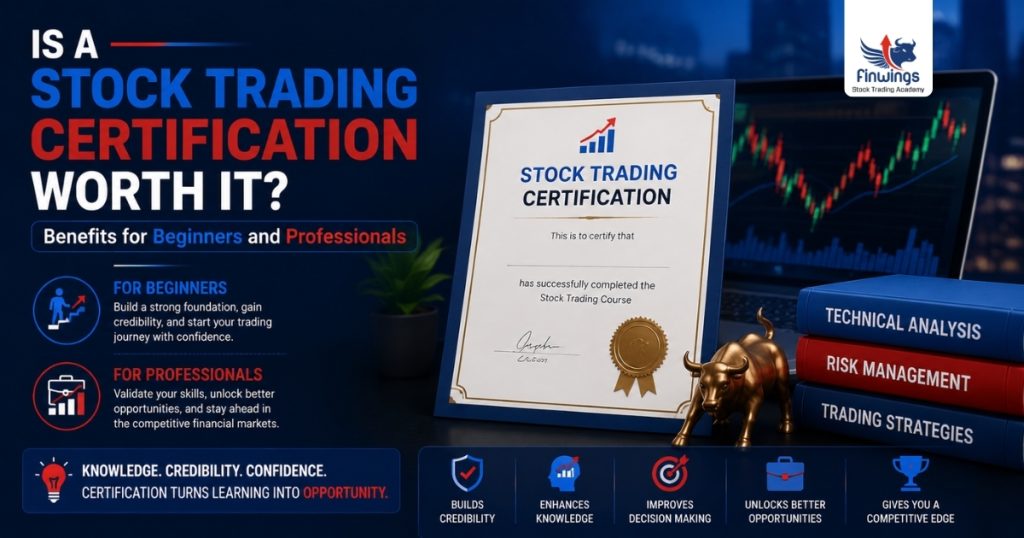
That’s why many beginners and working professionals now choose structured learning before stepping deeper into the market. A good certification helps you understand how trading actually works, how risk is managed, and how experienced traders make informed decisions instead of emotional ones. Whether you’re exploring investing for personal growth or planning a long-term career in stock trading, certifications can give you a much stronger foundation.
Why More People Are Choosing Stock Trading Certifications Before Entering the Market
A professional stock trading certification helps simplify the learning process. Instead of jumping between random online tips, you learn through a structured roadmap that covers real market concepts step by step.
Most quality programmes teach:
- Technical analysis
- Risk management
- Trading psychology
- Market fundamentals
- Chart reading
- Portfolio planning
- Entry and exit strategies
For beginners, this creates clarity and confidence. For professionals, it sharpens market understanding and adds credibility to their financial knowledge. In short, certifications don’t just teach trading. They teach discipline.
What Beginners Actually Learn From These Courses
Many new traders enter the market thinking it’s all about quick profits. Then reality hits. Markets move unpredictably, emotions take over, and losses happen faster than expected. That’s where structured learning becomes valuable.
Good stock market courses for beginners focus on helping learners understand how markets behave before they start risking money. You learn how to analyse trends, manage emotions, reduce unnecessary risks, and avoid common beginner mistakes.
This practical understanding often matters far more than blindly following stock tips online. Another benefit? You start developing a process instead of depending on guesswork.
NISM vs NCFM: What’s the Difference?
This is one of the most common questions among learners.
A NISM certification course (National Institute of Securities Markets) is widely recognised in India and focuses heavily on financial regulations, compliance, investment awareness, and market operations. It’s especially useful for people interested in advisory roles, wealth management, or financial services.
On the other hand, an NCFM certification course (NSE’s Certification in Financial Markets) focuses more on trading systems, derivatives, technical concepts, and practical market knowledge. Many active traders and market enthusiasts prefer it for hands-on learning.
Neither is “better” universally. It depends entirely on what you want from your learning journey.
Does a Certification Guarantee Trading Success?
Honestly, no certification can guarantee profits. The market doesn’t reward certificates alone. It rewards patience, discipline, risk control, and consistent learning.
But a professional stock trading certification can absolutely improve your chances of making smarter decisions. People who learn through proper training usually understand market risks better and avoid emotional trading habits that often hurt beginners.
Think of it this way: a certification won’t make someone instantly successful, but it can help them avoid learning expensive lessons the hard way.
Is It Worth It for Working Professionals Too?
Definitely.
Many working professionals now explore trading and investing as an additional income source or a long-term financial skill. Certifications help them understand the market properly without feeling overwhelmed by scattered information online.
For people already working in finance, banking, insurance, or investment services, certifications can also improve credibility and industry knowledge. A recognised programme may even open doors to better opportunities within the financial sector, especially for those planning a serious career in stock trading or investment advisory services.
How to Choose the Right Certification Programme
Not every course offers the same value, so choosing carefully matters.
Before enrolling, check:
- Whether the course is industry recognised
- Trainer experience and practical expertise
- Updated curriculum
- Real market examples and case studies
- Learning support after course completion
- Practical application, not just theory
The best stock market certification is the one that helps you understand markets realistically and apply concepts confidently in real situations.
Final Thoughts
A good stock trading certification is less about collecting a certificate and more about building real financial understanding. It helps beginners learn responsibly, improves confidence, and gives professionals stronger market knowledge in an increasingly competitive financial environment.
If you’re serious about learning trading properly instead of relying on random advice online, structured education can make a huge difference. Finwings Academy helps learners develop practical market knowledge through industry-focused training designed for both beginners and experienced professionals.
FAQs :
1. Is a stock trading certification useful for complete beginners?
Yes, certifications are especially useful for beginners because they provide structured learning instead of scattered information. A well-designed course helps learners understand market basics, trading psychology, and risk management before investing real money, making the learning process far less confusing and much more practical for long-term growth.
2. Which certification is better: NISM or NCFM?
A NISM certification course is ideal for learners interested in compliance, investment advisory, and financial services, while NCFM focuses more on practical trading concepts and market operations. The better option depends on your career goals, learning preferences, and whether you want theoretical understanding or active market-oriented skills.
3. Can certifications help build a professional trading career?
Yes, certifications can support a strong career in stock trading by improving market knowledge, analytical thinking, and financial understanding. Many employers value certified candidates because they demonstrate serious interest in the industry and possess structured learning instead of relying entirely on informal or self-taught trading methods.
4. Are stock market certification courses only for finance professionals?
Not at all. Many programmes are designed as stock market courses for beginners, making them suitable for students, entrepreneurs, working professionals, and anyone interested in learning about trading or investing. Most beginner-friendly courses start with basic concepts and gradually move towards more practical market understanding and analysis.
5. How do I choose the right stock market certification?
Look for a course with updated content, experienced trainers, practical learning, and strong industry recognition. The best stock market certification should teach real-world market concepts clearly instead of focusing only on theory. A programme with practical exposure and continued learning support usually offers better long-term value.