Getting into trading can feel exciting at first. You watch people talk about charts, profits, and market moves online, and it all looks fast-paced and rewarding. But once you actually begin, you realise trading is not just about buying and selling stocks. It’s about patience, decision-making, and learning how to stay calm under pressure.
That’s why joining a Stock market trading course can genuinely help beginners. Instead of trying to learn everything randomly from YouTube videos or social media, a structured academy gives you a clear path to follow. And honestly, that makes the learning process much less overwhelming.
The first 90 days are especially important because this is where most people either build strong habits or develop costly mistakes.
How a Stock Market Trading Course Builds Real Trading Confidence
A good Stock market trading course helps beginners understand market basics, risk management, chart reading, and practical trading strategies step by step. With proper guidance and market exposure, new traders build confidence gradually instead of relying on guesswork or emotional decision-making.
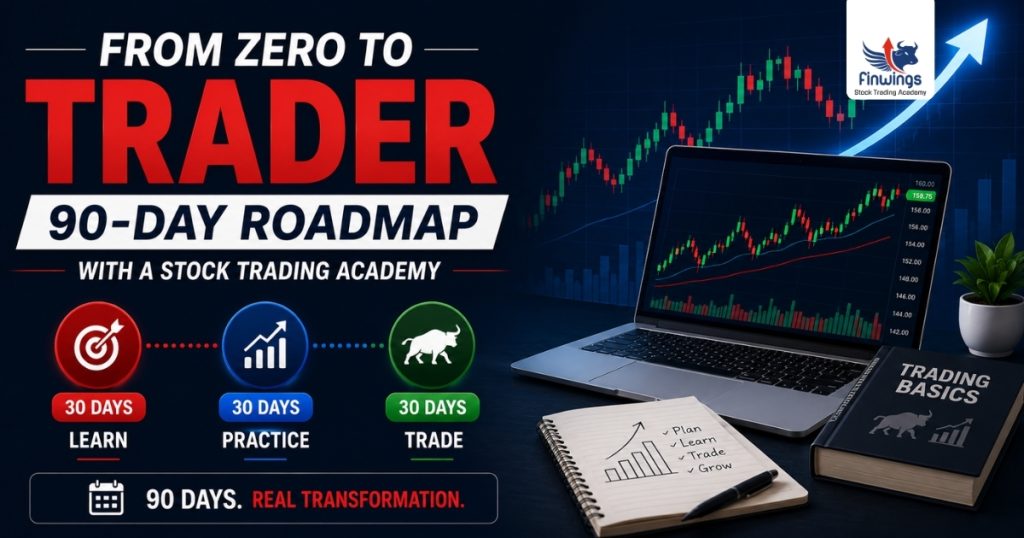
Month 1: Understanding the Market Without Rushing
Most beginners want to start trading immediately. That’s normal. But the smartest traders usually spend time understanding the basics first.
The first month is all about learning how the market actually works. This includes:
- Candlestick patterns
- Support and resistance
- Risk management
- Trading psychology
- Market behaviour
This stage also helps students learn stock trading in a more practical and realistic way instead of chasing shortcuts or “quick profit” strategies online. One thing many new traders don’t expect is how emotional trading can become. Fear, excitement, greed, and impatience can affect decisions very quickly. That’s why learning mindset and discipline early matters so much.
Month 2: Learning Through Live Market Practice
Once the basics feel clearer, the next step is applying that knowledge in real-time conditions. This is where Live market training becomes incredibly useful.
Watching live charts alongside experienced mentors helps beginners understand how markets behave during actual trading hours. You start noticing things that theory alone can’t teach properly – price movement, sudden volatility, market reactions, and timing.
This phase is also where many traders begin understanding an important truth: not every market move needs a trade. That lesson alone can prevent a lot of beginner mistakes. Many academies also introduce paper trading or demo sessions during this period. It gives students the chance to practise strategies without risking real money too early. Slowly, confidence starts replacing confusion.
Month 3: Building Consistency and Trading Discipline
The final stage focuses less on excitement and more on consistency. This is where Trading discipline becomes one of the most important skills a trader can develop.
Most beginners lose money not because they lack knowledge, but because they struggle with emotional decisions. Overtrading, revenge trading, and ignoring stop-losses are extremely common mistakes.
That’s why structured training usually focuses on habits like:
- Following a trading plan
- Managing risk properly
- Maintaining trade journals
- Staying patient during losses
- Avoiding impulsive decisions
This stage is often where beginners start thinking more like traders instead of gamblers. Over time, traders also begin discovering which style suits them better – intraday trading, swing trading, or longer-term strategies.
Why the Right Learning Environment Matters
rying to learn trading completely alone can become frustrating very quickly. There’s simply too much information online, and not all of it is reliable. For people looking for Stock market classes in Ahmedabad, choosing a learning environment with practical guidance, mentorship, and real market exposure can make the journey much smoother.
A good academy doesn’t just teach indicators or strategies. It helps students understand how to think clearly under pressure and manage risk responsibly. That’s what actually matters in the long run.
Final Thoughts
Trading is not something people master in a weekend. It takes patience, practice, and consistent learning to build confidence in the market. A structured Stock market trading course helps beginners avoid common mistakes while developing practical skills step by step.
From understanding charts to improving emotional control and decision-making, the first 90 days can completely shape how someone approaches trading in the future. Institutes like Finwings Academy continue helping aspiring traders learn through practical exposure, structured guidance, and real-market experience that feels relevant to today’s trading environment.
FAQs :
1. How long does it take to learn trading properly?
Most beginners understand the basics within a few weeks, but becoming consistently profitable usually takes much longer. Trading requires practice, emotional control, and experience. Learning gradually through structured education and market observation often helps people build stronger confidence and avoid common beginner mistakes early on.
2. Is a stock market trading course useful for complete beginners?
Yes, a Stock market trading course helps beginners learn market concepts, technical analysis, risk management, and trading psychology in a much more organised way. Structured learning reduces confusion and gives students proper guidance instead of depending entirely on random online videos or inconsistent trading advice.
3. Why is live market training important while learning trading?
Live market training helps beginners understand how real markets behave during trading hours. Watching price movement, volatility, and trade execution live gives students practical exposure that theoretical learning alone usually cannot provide, making it easier to improve confidence, decision-making, and market understanding gradually over time.
4. What does trading discipline actually mean?
Trading discipline means following your strategy consistently without letting emotions control decisions. It includes managing risk properly, avoiding impulsive trades, sticking to stop-losses, and remaining patient during market fluctuations. Strong discipline often plays a bigger role in trading success than simply knowing technical indicators or setups.
5. Are stock market classes in Ahmedabad suitable for beginners?
Yes, many Stock market classes in Ahmedabad are designed specifically for beginners with little or no market experience. Good academies usually start with basic concepts, practical learning, and guided market exposure before gradually introducing advanced trading strategies and real-time market analysis techniques.