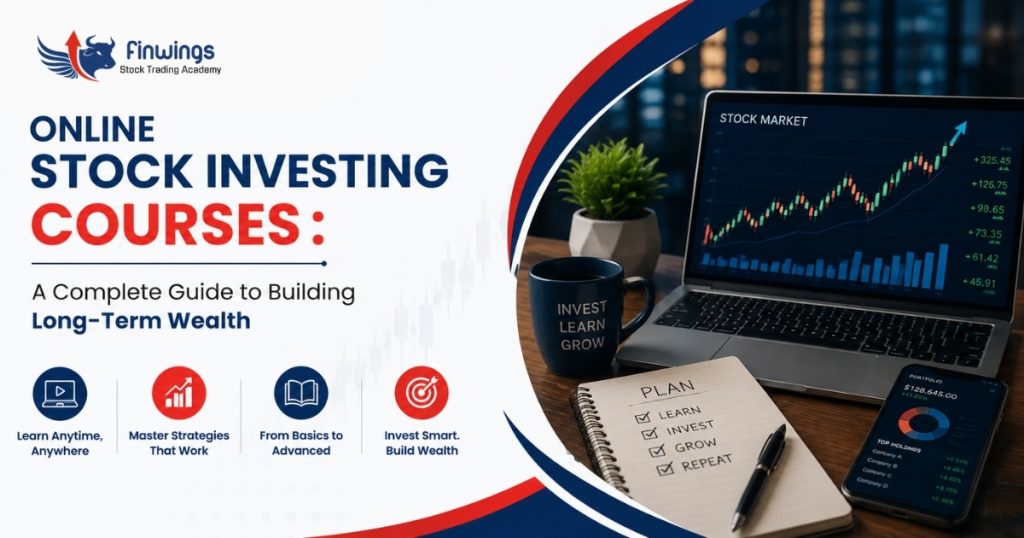
Investing in stocks can become part of a wealth plan, but it is not simply about finding the next winning share. Beginners need to understand market structure, risk, diversification, financial statements, valuation and disciplined decision-making before putting money at risk. For learners in Ahmedabad, online stock investing courses in Ahmedabad can provide a structured way to build these foundations.
Learn stock investing online in Ahmedabad with a practical, long-term approach
A good course should teach market basics, fundamental and technical analysis, portfolio thinking, risk management and trading discipline. The goal is not guaranteed returns, but better decisions and a repeatable learning process.
What should a beginner learn first?
Start with market structure, demat accounts, equity, mutual funds, ETFs and basic derivatives, alongside key investment risks. SEBI’s investor-education framework covers securities, market risks, primary and secondary markets, and investor responsibilities.
A credible course should move from theory to application. Look for modules on reading financial statements, understanding business quality, valuation, charts, position sizing, stop-loss concepts and maintaining an investment journal. Technical analysis can support market analysis, but it should not replace research.
Investing versus trading: know the difference
Investing generally focuses on owning suitable assets for longer-term financial goals, while trading seeks to benefit from shorter-term price movements. A learner should understand both before deciding which fits their goals, temperament and available time.
This distinction matters when comparing a financial market online in Ahmedabad with a course focused mainly on active trading. A broad curriculum can suit learners focused on wealth-building.
How to choose the right online course
Check whether the syllabus covers market practices, case studies, risk management and realistic expectations. Avoid programmes that promise fixed profits, “sure-shot” calls or effortless income. NSE states that stock-market returns are not guaranteed and investors can lose money, including their investment in a company that fails.
Also consider instructor experience, doubt-solving support, course duration and assessment methods. A well-designed curriculum should go beyond tips and isolated strategies. NISM and NSE both provide structured securities-market and investor-education resources, reinforcing the value of learning market concepts systematically.
Build skills before increasing capital
Learning should come before aggressive deployment of money. New investors can begin by setting financial goals, understanding risk capacity, studying companies or funds and creating a written investment process. Paper trading can help learners practise decisions without immediately exposing capital to market movements.
For those searching for an online stock trading course, the most valuable programme explains both opportunity and downside. Trading education should cover leverage, transaction costs, liquidity, volatility and emotional discipline rather than presenting frequent trading as an easy route to wealth.
Make learning part of a long-term plan
The strongest outcome of education is not a prediction; it is better judgement. Learners should review company information, market developments, portfolio allocation and their own decisions. Diversification, due diligence and risk management are central investor-education themes highlighted by NISM and SEBI.
For beginners, trading courses for beginners can be useful when they emphasise process, practice and risk awareness. Choose a course that helps you evaluate evidence and make decisions independently instead of relying on tips.
Final Thoughts
Building wealth through markets takes patience, consistency and informed choices. By choosing the right online stock investing courses in Ahmedabad, learners can develop practical knowledge while keeping expectations realistic. Finwings Academy can be considered a learning option for those who want structured exposure to stock-market concepts and market-oriented skills. Its online programmes highlight practical learning, risk management and disciplined trading education.
Frequently Asked Questions
1. Are online stock investing courses suitable for beginners?
Yes. A beginner can enrol if the course starts with market basics, risk management and practical investing concepts. The best online stock investing courses in Ahmedabad should not assume prior knowledge. Focus on learning how markets work, assessing investments and managing downside before committing significant capital.
2. How should I choose an online stock market course?
An online course can be valuable when it combines structured lessons with practical exercises, market examples and doubt-solving support. For beginners, compare the syllabus, trainer experience, course format, learning support and claims about returns. Avoid programmes that present guaranteed profits or effortless trading income as realistic.
3. Is investing different from stock trading?
Not necessarily. A strong course should explain both investing and trading, but you should choose the depth according to your goals. Online stock investing courses in Ahmedabad may prioritise fundamentals, valuation and portfolio construction, while active traders need greater focus on technical analysis, execution and risk controls.
4. Is stock trading risky for beginners?
Trading can be risky, particularly when leverage, high volatility or frequent transactions are involved. A suitable programme should explain position sizing, transaction costs, liquidity, emotional discipline and risk management. Education can improve decision-making, but it cannot remove market risk or guarantee profitable outcomes over time.
5. Can a stock market course help with long-term investing?
Yes, but treat the course as education rather than a promise of wealth. Before enrolling in online stock investing courses in Ahmedabad, check whether the curriculum covers fundamentals, technical analysis, diversification, risk management and realistic expectations. Your financial goals, risk capacity and investment horizon should guide your decisions.